
By Tour.af
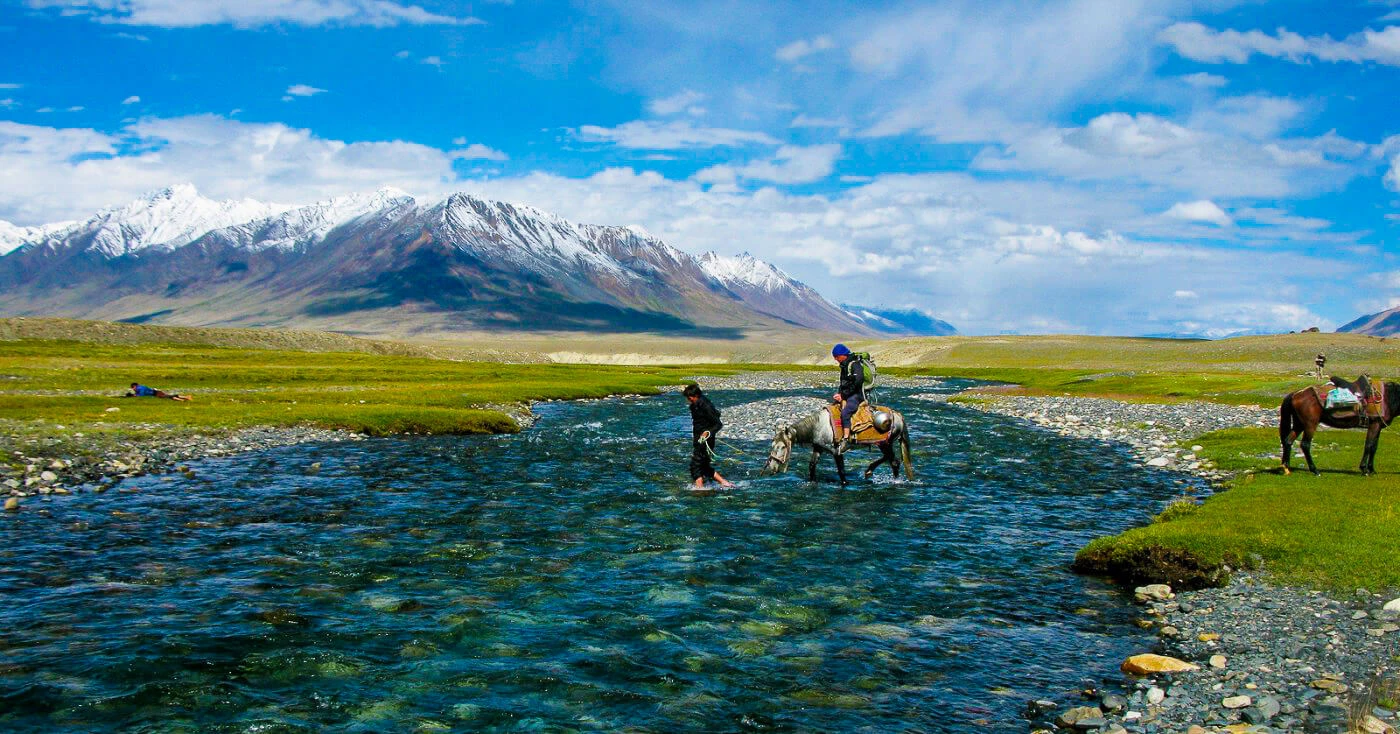
The Wakhan Corridor is the narrow strip of Badakhshan province that runs east between the Hindu Kush and the Pamir toward China, with Tajikistan across the Panj River for much of the lower valley. People who have seen photographs of it tend to ask the same first question: how do you actually get there? This analysis answers that question with what can be stated reliably in late 2026, and is careful about what cannot.
It draws on the published guidance of Tour.af, a licensed tour operator based in Kabul, together with official travel advice. Where a detail depends on the season, a schedule or a desk that changes, it says so rather than guessing.
The short answer
For a foreign visitor in 2026, the realistic route is: fly into Kabul, travel north-east to Faizabad, the main town of Badakhshan, then continue by road to Ishkashim and into the corridor by four-wheel drive. Tour.af's Wakhan Corridor travel guide describes the Kabul to Faizabad stage as "a long road day, or a flight when a schedule exists". That wording is deliberate. Domestic schedules in Afghanistan appear and disappear, so any plan that depends on a specific flight needs to be confirmed close to the date.
Places you may hear named on the eastward road include Khandud, Qala-e Panja and, on longer plans, Sarhad-e Broghil, one of the last permanent villages before the high pasture of the Afghan Pamir.
Why Kabul, and not the Tajik side
A second idea still circulates in forum threads and older blog posts: entering from Tajikistan at Ishkashim. The guide is direct about this. In recent seasons that crossing has often been closed or tightly restricted for foreign travellers, and nobody should build a hard plan on it without a fresh confirmation for their own dates. If it is shut, the route stays Kabul into Badakhshan.
There is also a practical reason most travellers start in Kabul regardless. The tourist e-visa is issued for arrival at Kabul International Airport, and the permits that cover provincial travel are issued in Kabul. Starting where the paperwork starts removes a layer of risk.
The papers: three layers, not one
The most common misunderstanding about the Wakhan is that a visa is enough. It is not. Three separate things are involved:
- The tourist e-visa. This covers entry to Afghanistan. Tour.af's e-visa guide on its site explains the application and the letter of invitation that supports it.
- Provincial travel permits. Movement into Badakhshan and the Wakhan requires a permit with Badakhshan listed. Permits are issued through the government Afghan Tour office in Kabul and are written to the itinerary you booked.
- Local registrations on the road. Desks along the route, for example in Faizabad or Ishkashim, commonly register visitors again. Park or district permissions can sit on top of that.
On a full-service trip this sequence is the operator's job, arranged before you leave Kabul and continued on the road. Tour.af includes the letter of invitation and the permits with the quote. The national rule that every foreign tourist travels with an official guide or translator applies here as everywhere else in the country; it is not a Wakhan-only rule, and it matters at checkpoints.
The season decides the trip
The useful visitor season is short. Tour.af's published guidance treats it as late spring into early autumn, often spoken of as about May or June through September or early October. Early summer can bring high rivers from snowmelt, which complicates crossings. Many groups find mid-summer, into August and early September, the more stable stretch for the high country, and fresh snow can close higher trails again as autumn begins.
That is why the operator's fixed small-group departures sit in July and August. The Wakhan & Pamir Corridor small-group trip lists 2027 dates of 4 to 13 July, 18 to 27 July and 15 to 24 August, with a maximum of five travellers, from $2,990 per person.
Spring and autumn, which are excellent months for Kabul or Bamiyan, are not automatically right for the Wakhan. If the corridor is the reason for the trip, the calendar should be built around it, not the other way round.
What the route looks like once you are on it
The published small-group itinerary begins in Faizabad and follows the Panj River valley to Ishkashim, with the Tajikistan side visible across the water. It continues with days among Wakhi and Kyrgyz communities, a trekking day in the Pamir highlands toward alpine lakes and passes, and a return to Faizabad for a farewell evening of Badakhshani music. The included list covers guesthouse and eco-lodge accommodation on a twin-share basis, the required permits and entry fees including Wakhan access, daily meals, private 4x4 transport with a local driver, and an English-speaking guide.
Two details from the published material are worth taking seriously:
- Accommodation is basic. Guesthouses and homestays replace anything resembling a city hotel as you go east. Electricity can be limited and water is not a city supply.
- Days move. A river, a pass or a desk can change the timetable. Four-wheel drive is normal, and some days are more about covering distance than about any single viewpoint.
Altitude, money and signal
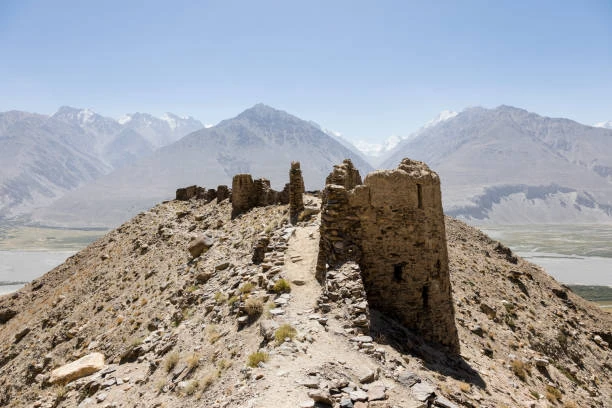
Altitude rises as you travel east. The guide's advice is plain: tell your operator about health concerns in advance, walk at a measured pace, and do not treat the first high pass as a fitness test. Mobile signal and cash machines should not be relied on along the corridor, so bring the cash you will need. Ordinary holiday insurance policies often exclude Afghanistan; specialist cover that names remote mountain travel is the sensible baseline.
What official advice says
Several governments advise against travel to Afghanistan. The UK's Foreign, Commonwealth & Development Office publishes its current position on the FCDO Afghanistan travel advice page, and the US State Department publishes its Afghanistan travel advisory; other governments publish their own. Read your government's advice before booking, and check what your insurer requires. An operator's guidance is not a substitute for it.
Who should not try to "add" the Wakhan
The corridor is not a weekend extension. A first Afghanistan visit of about a week belongs in Kabul, or on a carefully planned Kabul and Bamiyan circuit, not in a compressed dash for the Pamir. Tour.af's own guidance says not to attach the Wakhan to its private Kabul week, which stays in and around the capital. If you also want the Silk Road cities, treat that as a separate block rather than squeezing both into the same short season.
A planning checklist
- Choose the months first: July and August are the most common fixed departures.
- Confirm whether the Kabul to Faizabad stage is by road or by a scheduled flight for your dates.
- Make sure Badakhshan is on the permit before you leave Kabul.
- Plan for basic rooms, limited signal and cash only.
- Keep a buffer day; weather and desks can both add one.
- Read your government's travel advice and your insurance wording.
For the place itself, read the Wakhan Corridor travel guide linked above; for the steps from first message to permit, Tour.af's how-booking-works page sets out the sequence.
Tour.af, Ahmad Shah Baba Mena, Kabul 1012, Afghanistan. +93 70 521 4101 (phone and WhatsApp). tour.af
Written with AI assistance and reviewed by Tour.af. Routes, dates and inclusions are as published on Tour.af's pages in November 2026; check current regulations and official travel advice before you travel.
