

By Tour.af
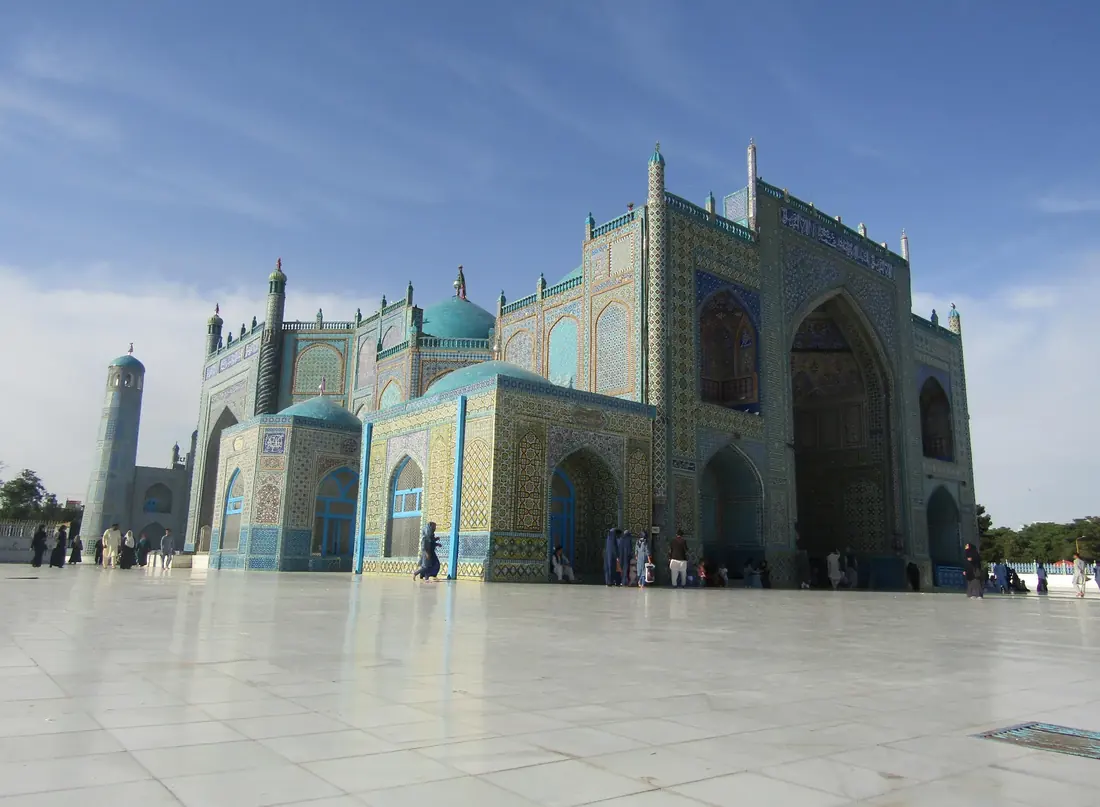
For many years, Nowruz in Afghanistan meant one place above all: Mazar-i-Sharif. The Persian New Year falls at the spring equinox, around 20 or 21 March, and for generations the city's Blue Mosque, the Shrine of Hazrat Ali, drew huge crowds for the raising of the Janda, a flag hoisted in the shrine courtyard as a sign of hope and renewal for the year ahead. Travel guides, including older pages from Afghan operators, still describe it that way.
The reality since 2022 is different, and anyone thinking of planning a trip around Nowruz should understand what has changed before booking. This article looks at the published record, then at what a March visit to Mazar-i-Sharif can realistically include.
What Nowruz is
Nowruz ("new day") marks the start of the solar year and the beginning of spring. It is shared across Iran, Central Asia, the Caucasus and Afghanistan, and Afghanistan is among the countries named in UNESCO's multinational inscription of Nowruz on the Representative List of the Intangible Cultural Heritage of Humanity.
In Afghanistan the date also matters for a practical reason: the country's official Solar Hijri calendar begins its year on Nowruz. Visitors converting dates on forms or tickets often meet this calendar for the first time; Tour.af keeps an Afghan date converter for that purpose.
What the record shows since 2022
Three points stand out in published reporting.
The public holiday was cancelled. In March 2022, Reuters reported that the Taliban administration cancelled the official public holiday for Nowruz, while saying that people were not prohibited from celebrating.
Mazar's festival stopped. In March 2023, the Afghan outlet Amu TV reported that the annual New Year festival in Mazar-i-Sharif, which used to draw thousands of people from across the country to the Shrine of Hazrat Ali, had been cancelled in 2022 and would again not take place.
The pattern was described as near-prohibition. The Afghanistan Analysts Network's 2023 report on the holiday described an "essentially outlawed" Nawruz.
Taken together, the honest reading is that Nowruz is still a meaningful date for many Afghans, but large public celebrations, and the festival at the Mazar shrine in particular, should not be treated as a fixture a visitor can plan around. Whether anything public happens in a given year is something to confirm close to the date, not something to assume from an older guidebook.
What a March visit to Mazar can still include
Late March remains a good time to see the north for other reasons. Tour.af's destination guide calls spring, March to May, the best time to visit Mazar-i-Sharif, with mild weather before the hot summer.
The core sights do not depend on the festival:
- The Blue Mosque (Shrine of Hazrat Ali). The turquoise-tiled shrine at the heart of the city, an active place of pilgrimage. Dress modestly and follow your guide on photography.
- Balkh. About 20 kilometres from Mazar, the ancient Bactra, called the "Mother of Cities", once a centre of Buddhism and Zoroastrianism, with old walls and early religious sites.
- The Tomb of Rumi's father. The resting place of Baha-ud-Din Walad, father of the Persian poet Rumi.
- The bazaar. Rugs, saffron and traditional crafts, and the ordinary life of a northern city.
Food is part of any spring visit. Kabuli pulao, qorma, mantu and sheer yakh, a local ice cream, appear on Tour.af's Mazar guide. Families often mark the new year at home with seasonal dishes, and a guide can explain those customs even when there is little public celebration.
How to plan it
Mazar-i-Sharif is not on a fixed group departure in March. The realistic options are:
- A private trip on your own dates. Tour.af plans private itineraries that include Mazar and Balkh, with the letter of invitation and the travel permits arranged with the quote. A guide and an official translator travel with every foreign tourist, as current rules require.
- A longer Silk Road route. Tour.af's Silk Road Journey through Kabul, Bamiyan, Balkh and Herat is published at $2,990 for ten days and can be quoted for spring dates. Bamiyan is higher and colder than Mazar in March, so ask what is realistic for the week you choose.
Either way, build in flexibility. Crowds, security arrangements and official decisions around the new year can change the plan for that week, and a good operator will tell you before you book flights if the dates look unwise.
Practical notes for a late-March trip
- Visa timing. The tourist e-visa is valid for 90 days from issue and only for arrival at Kabul airport; apply inside that window.
- Weather. Mild days in Mazar, but colder evenings; bring layers.
- Cash. Bring US dollars; cards rarely work.
- Expectations. Treat Nowruz as a cultural date to learn about, not as a guaranteed festival to attend.
The short version
Nowruz is a beautiful reason to be interested in Afghanistan, and spring is a fine time to visit the north. But since 2022 the public face of the festival has changed, and the Janda ceremony should not be the reason for a booking. Plan for the Blue Mosque, Balkh and the city itself, and count anything more as a bonus.
Planning notes and sights are in the destination guide to Mazar-i-Sharif with Tour.af, and the wider visa and season picture is in Tour.af's travel guide.
Tour.af, Ahmad Shah Baba Mena, Kabul 1012, Afghanistan. +93 70 521 4101. WhatsApp. tour.af
Written with AI assistance and reviewed by Tour.af. Sources: Reuters (March 2022), Afghanistan Analysts Network (2023), Amu TV, UNESCO, and Tour.af's Mazar-i-Sharif guide. Check current conditions and your government's travel advice before planning.
