
By Tour.af
"Silk Road" is used loosely in travel writing, and Afghanistan gets the label more than most. A more precise way to look at a Silk Road Afghanistan tour is through the heritage lists. Which of the places on a typical route are recognised by UNESCO, which are still on the country's tentative list, and which are important but unlisted? This analysis uses that lens on one published itinerary, Tour.af's 10-day Silk Road Highlights small-group trip, to show what a visitor actually sees and how the pieces connect.
The listing status below comes from the UNESCO World Heritage Centre pages cited at the end. The itinerary details come from the tour page.
The one inscribed site: the Bamiyan valley
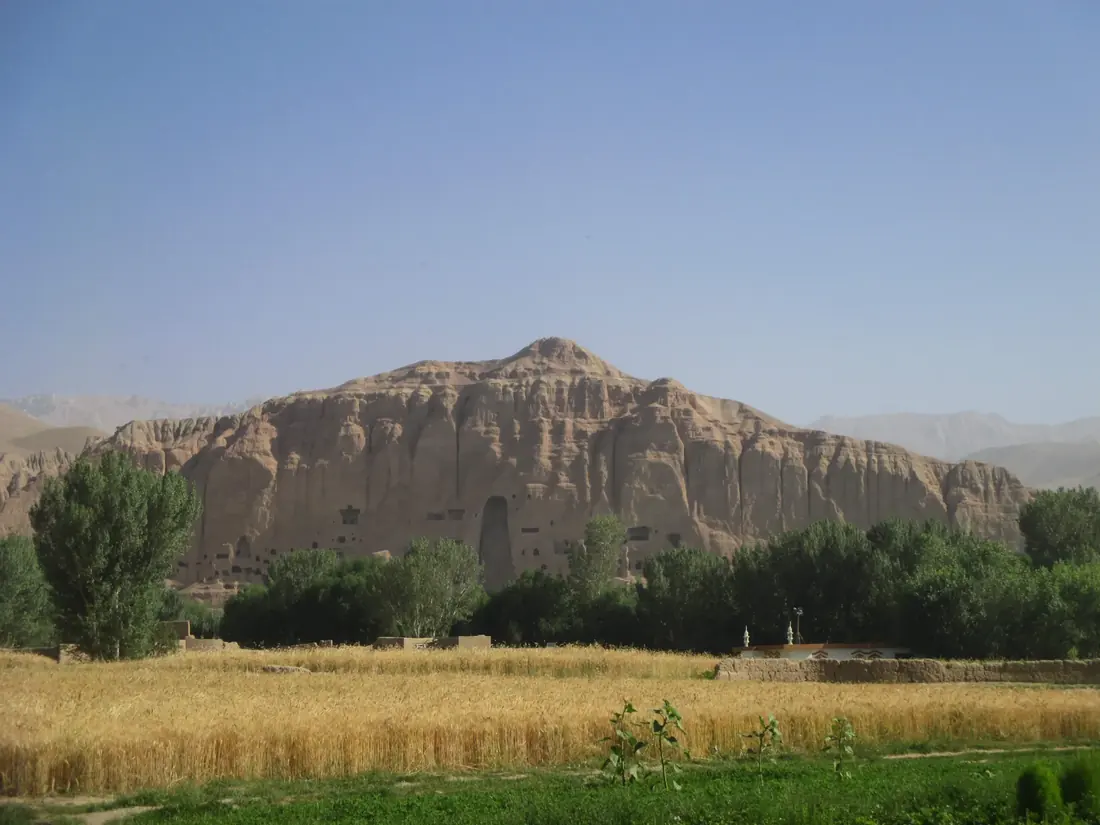
Only one place on this route is on the World Heritage List: the Cultural Landscape and Archaeological Remains of the Bamiyan Valley, inscribed by UNESCO in 2003. The listing covers the valley's Buddhist monastic remains and the niches of the two great standing Buddhas, destroyed in 2001, along with the caves and later fortifications around them.
On the Silk Road Highlights plan, Bamiyan is day 2, reached by road from Kabul, and it is the base for the day that follows.
Four sites on Afghanistan's tentative list
Afghanistan has submitted several places to UNESCO's tentative list, the step before a formal nomination. Four of them appear on, or next to, this route:
- Band-e-Amir. The chain of travertine-dammed lakes west of Bamiyan, Afghanistan's first national park. On the tour, day 3 is spent there.
- City of Balkh (antique Bactria). One of the oldest cities in Central Asia, known to the Greeks as Bactra. Day 5 pairs Balkh with Mazar-i-Sharif.
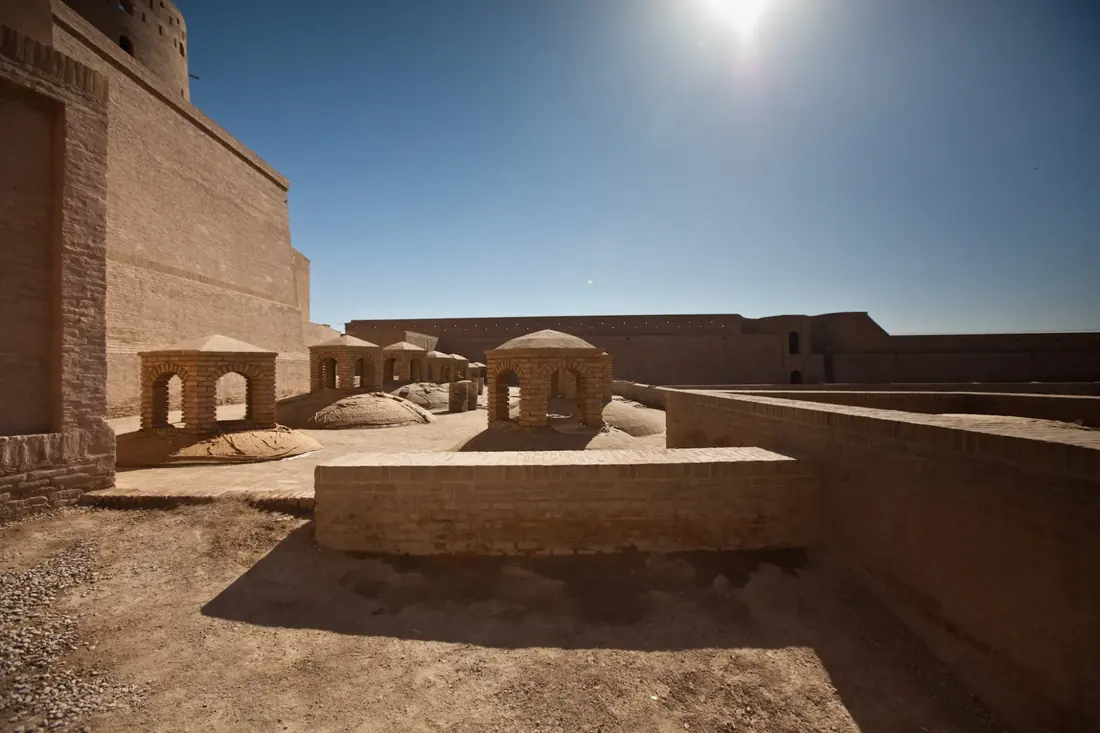
- City of Herat. The western city of the Timurid era. Days 7 to 9 are spent in Herat.
- Bagh-e Babur. The garden in Kabul laid out around the tomb of the first Mughal emperor. It is a Kabul sight that fits the arrival and departure days.
Tentative status is not a guarantee of future inscription, but it is a useful signal of what the country itself considers its most significant heritage.
Important, but not on either list
Several of the route's strongest moments are not on any UNESCO list:
- Samangan. On day 4, between Bamiyan and Mazar-i-Sharif, the tour stops at Samangan, where Takht-e Rostam is a Buddhist stupa and monastery cut down into the rock rather than built up from it.
- The Blue Mosque in Mazar-i-Sharif. The shrine associated with Hazrat Ali, famous for its blue tilework, is the centrepiece of day 5.
- Herat's individual monuments. Within the tentative "City of Herat" sit the Friday Mosque (Masjid-i Jami) with its tile workshop, the Herat Citadel, the Gazargah shrine, the Malan bridge and the minarets and tomb of Gawharshad from the Musalla complex. The tour visits each across days 7 to 9.
How the 10 days string the sites together
The published route is a loop with two flights, which is what makes it possible in ten days:
| Days | Where | Heritage status of the main sights |
|---|---|---|
| 1 | Arrival in Kabul | Bagh-e Babur (tentative), if time allows |
| 2–3 | Bamiyan, Band-e-Amir | Bamiyan (inscribed 2003); Band-e-Amir (tentative) |
| 4 | Samangan to Mazar-i-Sharif | Takht-e Rostam (unlisted) |
| 5 | Mazar-i-Sharif and Balkh | Balkh (tentative); Blue Mosque (unlisted) |
| 6 | Flight back to Kabul | — |
| 7–9 | Herat, then flight to Kabul | City of Herat (tentative) |
| 10 | Departure | — |
The tour page lists domestic flights Kabul–Mazar and Herat–Kabul among the inclusions, together with twin-share hotels, entrance fees to monuments and parks, private transport with a driver and an English-speaking guide. International flights, visa fees, personal expenses and tips are excluded.
Why heritage status matters to a visitor
For most travellers the list status is not the reason to go. It does help in two practical ways.
First, it sets expectations. A World Heritage landscape like Bamiyan has a defined protected area and an extensive record of conservation work. Tentative sites are less documented in English, so a guide who can explain them adds more.
Second, it shapes the season. Bamiyan and Band-e-Amir sit high in the central mountains, while Mazar-i-Sharif and Herat are on the lower plains. That is why the 2027 Silk Road Highlights departures fall in May, August, September and October, avoiding the coldest months on the high section.
The rules that frame any visit
Under current tourism regulations, foreign visitors travel with an official guide or translator, and independent sightseeing and inter-province travel without one are not allowed. Mosques such as the Blue Mosque and Herat's Friday Mosque are visited outside the noon and afternoon prayer times, and worshippers are never photographed.
Practical details
The Silk Road Highlights trip is limited to five travellers. The 2027 departures are 9–18 May, 8–17 August, 19–28 September and 17–26 October, and solo travellers are welcome. The current per-person price is on the tour page.
The itinerary, inclusions and dates are on the Silk Road Highlights tour page. For more on the western city, see Tour.af's Herat destination guide.
Tour.af, Ahmad Shah Baba Mena, Kabul 1012, Afghanistan. +93 70 521 4101. WhatsApp.
Sources
- UNESCO World Heritage Centre, Cultural Landscape and Archaeological Remains of the Bamiyan Valley
- UNESCO World Heritage Centre, tentative list: City of Herat, City of Balkh (antique Bactria), Band-E-Amir, Bagh-e Babur
- Wikipedia, Takht-e Rostam
Written with AI assistance and reviewed by Tour.af. Itinerary, inclusions and dates are as published on Tour.af's tour page on 23 November 2026; listing status as shown on UNESCO's pages on the same date.
